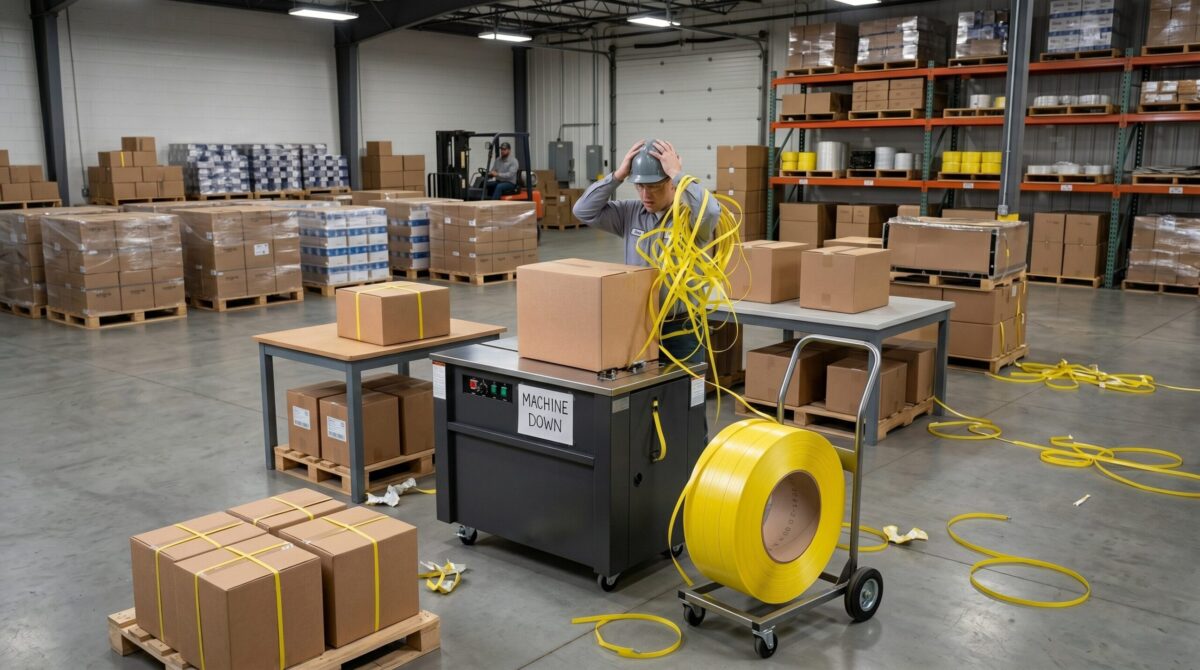
Categories
Blog

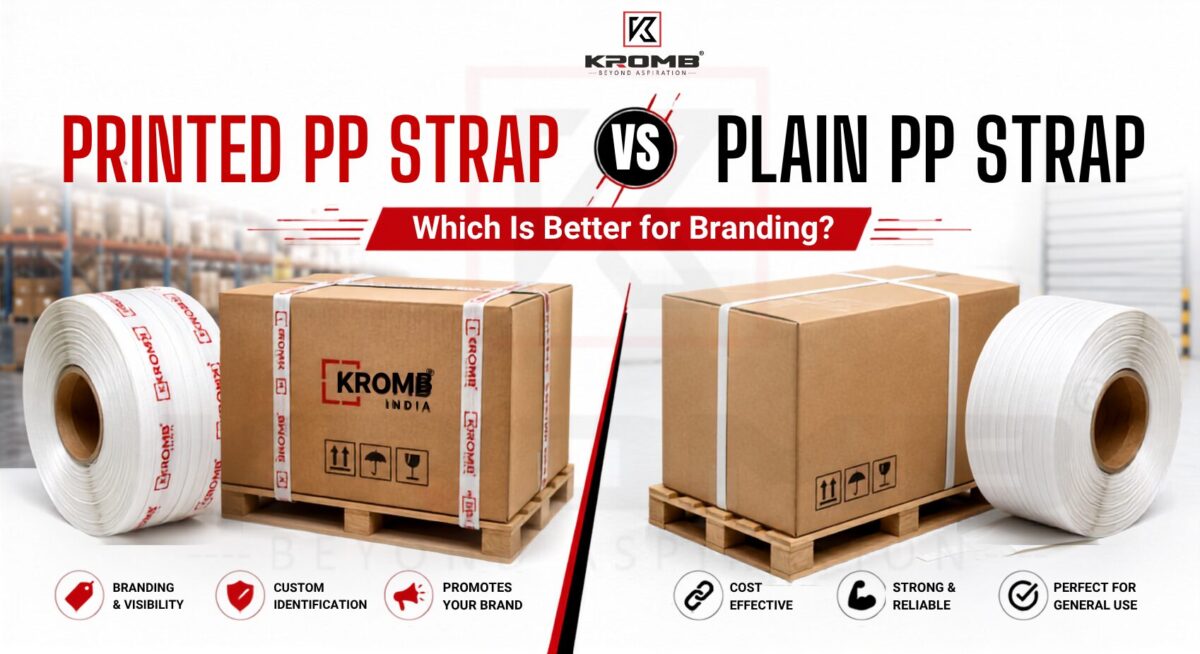
Printed PP Strap vs Plain PP Strap: Which Is Better for Branding?

Printed PP Strap vs Plain PP Strap: Which Is Better for Branding?

Compare printed and plain PP strapping rolls for branding, package appearance, cost, easy checking and machine use.

Quick Answer

Overall, printed PP strap is better for branding because it can show a company name, logo, website or short message. However, plain PP strap is often better for low-cost and general packaging when branding is not needed.

First, packaging protects products during storage and transport. In addition, it helps customers notice a company and remember its brand. Therefore, even a small item such as PP strap can improve the final look of a package.

For this reason, many manufacturers, exporters and distributors compare printed PP strap vs plain PP strap before choosing packaging material. Both options can secure cartons and bundles. However, each option meets a different branding and budget need.

For example, plain PP strap is simple, practical and lower in cost. In contrast, custom printed PP strap can repeat a company name, logo or website along the strap.

What Is a Printed PP Strap?

In simple terms, a printed PP strap is a polypropylene strap with custom text or branding on its surface. Usually, the design repeats along the full length. As a result, the brand stays visible on more than one side of the package.

What Can Be Printed?

For example, businesses may print:

  • Company name
  • Brand name
  • Simple logo
  • Website address
  • Contact number
  • Product name
  • Distributor name
  • Short handling message

Where Can It Be Used?

In addition, printed PP strapping rolls can be made for manual, semi-automatic and fully automatic use. However, the strap must match the required width, thickness, winding and machine settings.

What Is a Plain PP Strap?

By comparison, a plain PP strap is a standard polypropylene strap without a printed company name, logo or message. Although it does not offer direct branding, it still holds and secures the package.

Common Uses of Plain PP Strap

  • Carton packaging
  • Bundle securing
  • Industrial dispatch
  • Warehouse packing
  • Internal material movement
  • Export packaging
  • Road transport packaging
  • Manual and machine strapping

Moreover, plain straps come in different colours, widths, thicknesses, material grades and coil sizes. Therefore, a business can choose the right strap for its packing needs.

01

Printed PP Strap

A strong option for brand visibility, customer dispatch and quick package checking.

02

Plain PP Strap

A practical option for general packing, internal use and cost-focused work.

Printed PP Strap vs Plain PP Strap: Comparison

Quick Difference at a Glance

Comparison PointPrinted PP StrapPlain PP Strap
Brand visibility High Limited
Company name or logoCan be customisedNot printed
Packaging appearanceCustom and professionalSimple and standard
Shipment identificationEasier to identifyDepends on carton labels
Initial costUsually higherUsually lower
Minimum order quantityUsually requiredMore flexible
Marketing value High Low
Colour optionsAvailableAvailable
Machine useAvailable as per specificationAvailable as per specification
Best useBranded customer dispatchGeneral and internal packaging

1. Better Brand Visibility

Printed Strap Keeps the Brand Visible

First, brand visibility is the main difference between printed and plain PP strap. However, a plain strap may look similar to straps used by many other businesses.

In contrast, a logo printed PP strap or company name printed PP strap makes the package easier to notice. For example, the branding may stay visible during loading, storage, transport and delivery.

More Brand Exposure During Transport

Moreover, warehouse workers, transporters, distributors, retailers and customers may all see the strap. Therefore, one packing item can give the brand repeated exposure.

  • Factory loading
  • Warehouse storage
  • Road transportation
  • Distributor handling
  • Retailer delivery
  • Customer receiving
  • Product unpacking

2. More Professional Packaging Appearance

Next, package appearance can shape how customers view a supplier. As a result, a carton with a custom strap often looks more organised. In addition, the package may appear more careful and professional.

01

Industrial Manufacturing

Creates one clear branded look across cartons, bundles and dispatch packages.

02

Textile and Spinning

Makes packed textile products easier to notice in a busy warehouse.

03

Pharmaceutical Packaging

Adds company details while official information stays on approved labels.

04

Export and Distribution

Keeps the manufacturer or exporter name visible during handling.

However, the print must stay clear and easy to read. Therefore, use a simple logo and a strong colour contrast.

3. Easier Product and Shipment Identification

Faster Visual Checking

For example, warehouses and transport centres may handle many similar cartons. Because of this, plain straps can slow down quick checking. As a result, printed straps can help workers notice the company without reading every label.

Printed Strap Supports Labels

In addition, a branded strap can support shipment checking. Nevertheless, it should not replace barcodes, invoices, product labels or transport papers.

Important: Printed PP strap is an extra checking tool. However, it does not replace required product and transport documents.

4. An Extra Packaging Marketing Opportunity

One Strap Performs Two Jobs

Similarly, businesses often use printed cartons, labels and tapes for branding. As a result, printed PP strap gives the company one more place to show its name. In addition, the strap can secure the package and promote the brand at the same time.

  1. It holds and supports the package.
  2. It repeats the company name or message.

Useful for Regular Dispatches

Moreover, printed strap is useful for companies that send products every day. Over time, repeated branding can help customers and distributors remember the company.

5. Support Against Strap Replacement

For example, a custom strap can make a packaging change easier to notice. As a result, a receiver may question a package that normally uses a printed strap but arrives with a plain one.

However, printed PP strap is not a complete security seal. Therefore, businesses that pack valuable goods should also consider:

  • Tamper-evident labels
  • Security seals
  • Stretch wrapping
  • Shrink wrapping
  • Serial number labels
  • Barcode tracking
  • Dispatch photographs

6. Cost Difference Between Printed and Plain PP Strap

Why Printed Strap May Cost More

First, plain PP strap usually costs less because no custom print setup is needed. On the other hand, printed strap may need artwork, print setup and a minimum order quantity.

In addition, the final price may depend on:

  • Order quantity
  • Strap width and thickness
  • Material grade
  • Strap colour
  • Print colour
  • Logo or text design
  • Number of printed characters
  • Coil weight and core size
  • Manual or machine application

Minimum Quantity for Custom Printing

At Kromb India Pvt. Ltd., custom name or logo printing is generally available for eligible orders of 350 kg or more. However, final approval depends on strap size, print design and production limits.

When Is Printed PP Strap the Better Choice?

Choose Printed PP Strap When Branding Matters

Therefore, printed PP strap may be the right choice when:

  • Your company name should stay visible on each package.
  • Regular customer or distributor dispatches need stronger branding.
  • A consistent branded look matters across all shipments.
  • Several transport partners handle the cartons.
  • Easier visual shipment checking is required.
  • Products are supplied to different states or countries.
  • The order meets the minimum printing quantity.
  • Distinctive packaging is important for your brand.

When Is Plain PP Strap the Better Choice?

Better for General Packaging

For general use, plain PP strap is often enough when direct branding is not needed. In addition, it works well for internal factory movement and daily warehouse work.

Better for Small or Urgent Orders

For small orders, plain strap is often easier to arrange. Moreover, it may be available faster because no print approval is needed.

  • Internal factory use is the main purpose.
  • Custom branding is not needed.
  • Small order quantities are common.
  • Urgent material is required.
  • Brand details change often.
  • Final customers do not see the package.
  • A new strap size is being tested.
  • Low packaging cost is the main priority.

Therefore, plain PP strap is not a lower-quality choice. Instead, it is the right option for simple and cost-focused packing.

Can Strap Colour Be Used for Branding?

A fixed strap colour can also support quick checking. For example, a company may use different colours for different products, departments or dispatch types.

  • Red: urgent or priority dispatch
  • Blue: export or selected product category
  • Green: warehouse or product identification
  • Yellow: high-visibility packaging
  • Black: strong industrial appearance
  • White: clean packaging appearance

However, colour alone may not show which company packed the goods. Therefore, combining strap colour with printed branding usually gives a stronger result.

How to Choose Printing for PP Strap

Keep the Message Short

First, keep the company name short and easy to read. Therefore, avoid adding too many words to a narrow strap.

Use a Simple Logo

Next, use a simple logo because small details may not print clearly. Instead, choose a clean logo, brand name or short website address.

Choose Clear Colour Contrast

Also, the print colour should stand out from the strap colour. For example, dark printing is often easier to see on a light-coloured strap.

Confirm the Strap Details

Before approving the artwork, confirm these strap details:

  • Strap width
  • Strap thickness
  • Material grade
  • Strap colour
  • Coil weight
  • Core size
  • Required breaking strength
  • Machine type

Approve the Artwork Carefully

Finally, check spelling, logo direction, spacing and repeat distance. As a result, you can avoid simple errors during bulk production.

Does Printing Affect PP Strap Performance?

Strength Depends on the Strap Specification

In fact, printing does not decide the strength of a PP strap. Therefore, performance mainly depends on the raw material, size, thickness and production quality.

Important Performance Factors

  • Raw material composition
  • Width and thickness consistency
  • Tensile strength
  • Elongation
  • Joint strength
  • Surface finish
  • Knurling quality
  • Coil winding
  • Strap straightness
  • Machine feeding performance

Therefore, select the correct strap details first. After that, add printing as a branding feature.

Printed PP Strap for Different Packing Methods

Manual PP Strap

For manual use, PP strap works with hand tools, buckles, seals or tensioners. In addition, printed manual strap can be used for cartons, bundles and general industrial products.

Semi-Automatic PP Strap

For semi-automatic machines, the strap needs stable width, thickness and winding. Also, the print should not disturb smooth movement through the machine.

Fully Automatic PP Strap

For fully automatic machines, the strap may run at high speed. Therefore, it needs controlled thickness, good winding, proper straightness and reliable feeding.

For more details, view our fully automatic PP strapping roll for high-speed packing machines.

Printed PP Strap vs Printed Packaging Tape

Different Packaging Functions

Printed tape mainly seals a carton. In contrast, PP strap helps hold, support or bundle the package.

Using Both Together

However, some companies use printed tape and printed PP strap together. As a result, the carton gets sealing support as well as stronger brand visibility.

Which PP Strap Is Better for Branding?

In conclusion, printed PP strap vs plain PP strap for branding has a clear answer: printed strap is usually better. As a result, the package gains stronger brand visibility, easier checking and a better overall look.

However, plain PP strap remains useful for internal packing, small quantities and cost-focused work. Therefore, the right choice depends on budget, order size and packing purpose.

Finally, confirm the strap width, thickness, colour, material grade, machine type and monthly use before ordering. This step helps you choose a strap that looks good and works well.

Frequently Asked Questions

Branding and Cost Questions

What is the difference between printed PP strap and plain PP strap?

In simple terms, printed PP strap includes a company name, logo or custom message. In contrast, plain PP strap has no custom printing and is mainly used to secure the package.

Is printed PP strap better for branding?

For branding, printed PP strap is usually the better choice because the company name or logo stays visible around the package.

Is printed PP strap more expensive than plain PP strap?

In most cases, printed PP strap costs more because it needs artwork, print setup and a minimum order quantity. However, the added branding may support regular customer dispatches.

Can a company logo be printed on PP strap?

A company logo can be printed when the design fits the strap width and print method. For better results, use a simple logo with clear lines.

What is the minimum order quantity for printed PP strap?

At Kromb India Pvt. Ltd., custom printing is generally available for eligible orders of 350 kg or more. However, the design and strap details must receive production approval.

Printing and Machine Questions

Can printed PP strap be used in automatic machines?

Printed PP strap can be used in automatic machines. However, its width, thickness, winding and other details must match the machine.

Does printing reduce the strength of PP strap?

In fact, strap strength mainly depends on raw material, size, thickness, production quality and winding. Therefore, printing should be treated mainly as a branding feature.

Is printed PP strap tamper-proof?

No. However, printed strap may help a receiver notice a packaging change, even though it is not a complete security seal.

Which industries can use custom printed PP strap?

For example, textile, pharmaceutical, paper, corrugation, ceramic, engineering, electronics, furniture, FMCG and warehouse businesses can use printed PP strap.

Can different strap colours be used with custom printing?

Different strap colours can be used with custom printing. However, the print colour must stand out clearly from the strap colour.

Add Your Brand Name to Every Package

Finally, Kromb India Pvt. Ltd. makes PP strapping rolls for manual, semi-automatic and fully automatic packing. In addition, custom company-name and logo printing is available for eligible bulk orders.
Categories
Blog

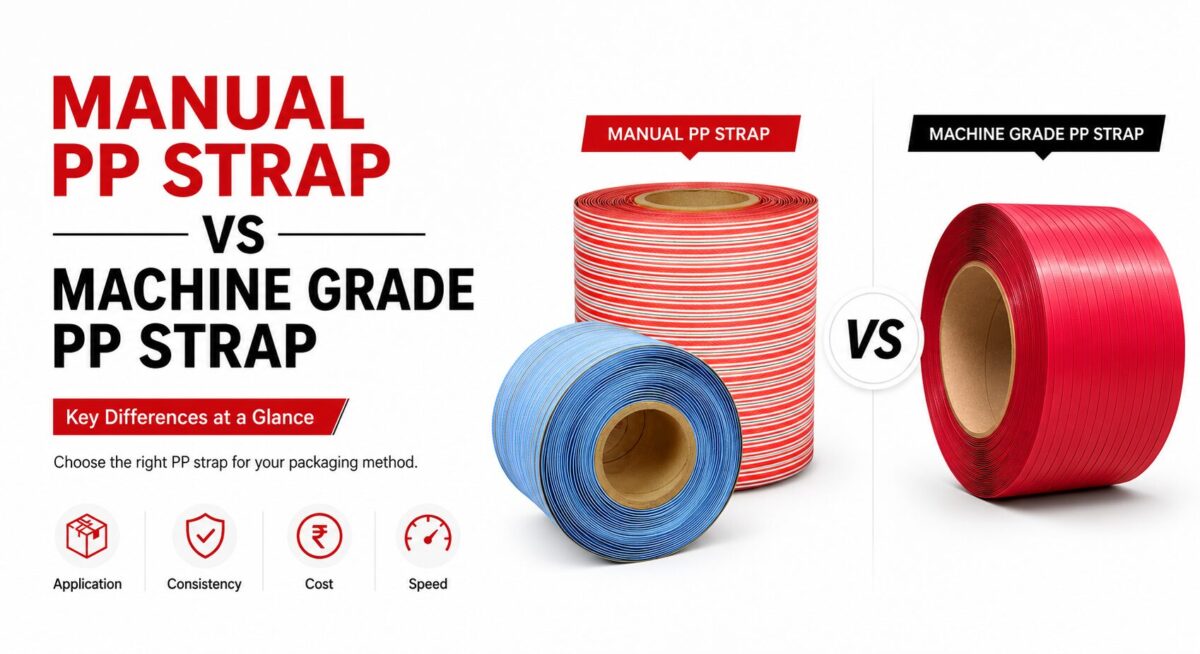
Manual PP Strap vs Machine Grade PP Strap

PP Strapping Selection Guide

Manual PP Strap vs Machine Grade PP Strap: Key Differences and Selection Guide

Learn how manual PP strap differs from semi-automatic and fully automatic machine-grade PP strap. In addition, compare application method, dimensional consistency, feeding performance, packing speed and total packaging cost before selecting a roll.

Published by Kromb India Pvt. Ltd. Updated: 18 July 2026 Estimated reading time: 7 minutes

What Is the Main Difference?

Manual PP strap is mainly used with hand tensioners, sealers, clips or buckles and is suitable for low or irregular packing volumes. In contrast, machine-grade PP strap is manufactured with tighter control over width, thickness, camber, surface and coil winding so it can feed, tension and seal consistently in semi-automatic or fully automatic strapping machines.

Manual PP Strap vs Machine Grade PP Strap: Difference at a Glance

The correct PP strapping roll should match the packaging equipment, carton weight, required tension, daily packing volume and transport conditions. Therefore, the table below summarizes the practical differences that buyers should review before ordering.

Comparison of manual PP strap and machine-grade PP strap
Comparison PointManual PP StrapMachine-Grade PP Strap
Application methodHand tensioner, manual sealer, clip or buckleSemi-automatic or fully automatic strapping machine
Packing volumeLow, irregular or moderate volumeRegular, repetitive or high-volume packing
Dimensional controlNormal variation may be acceptable for manual useConsistent width and thickness are essential
Coil windingDesigned for manual dispensingPrecision winding supports smooth and continuous feeding
Camber controlMinor curvature may not affect hand applicationLow camber helps the strap travel through machine guides
Packing speedDepends on operator skill and effortFaster and more repeatable packing cycles
Primary benefitFlexibility and economical manual packagingConsistent feeding, sealing, tension and productivity
Risk if the wrong grade is usedLoose packaging, excess effort or weak joint qualityJamming, missed sealing, breakage, downtime and waste

What Is Manual PP Strap?

Manual Application

Designed for Hand Tools and Flexible Packing

Manual PP strap is wrapped around a carton, bundle or product by an operator. After wrapping, the operator applies tension with a hand tensioner and normally completes the joint with a metal clip, buckle or manual sealing tool.

  • Suitable for hand tensioners and sealers
  • Useful for changing carton and bundle sizes
  • Practical for mobile or multi-location packing
  • Suitable for low or irregular dispatch volume
  • Economical for basic manual bundling
Important Clarification

Manual Grade Does Not Automatically Mean Weak

The term “manual grade” describes the intended application method, not a fixed strength level. Furthermore, manual PP strap can be produced in different widths, thicknesses, raw-material grades and tensile-strength ranges.

However, the correct specification still depends on package weight, strap tension, joint type, number of straps and transport conditions.

Related product: View Kromb India’s manual PP packing strap for hand-tool and cost-sensitive packaging applications.

What Is Machine-Grade PP Strap?

Machine-grade PP strap is manufactured for equipment that feeds, tensions, heat-seals and cuts the strap through a controlled mechanical cycle. Therefore, reliable operation requires consistent strap dimensions and winding throughout the roll—not only good strength at one point.

01

Consistent Dimensions

Controlled width and thickness help the strap move through guides, rollers and sealing areas.

02

Uniform Winding

Even winding reduces loose loops, overlapping coils, sudden resistance and feeding interruptions.

03

Stable Running Performance

Controlled camber, stiffness, surface and elongation support repeatable tensioning and sealing.

Machine grade is not defined only by higher tensile strength. However, a strap may feel strong during manual testing but still create machine problems if its width, thickness, camber, winding or surface is inconsistent.

Which PP Strap Grade Should You Choose?

Choose Manual Grade

Best When Flexibility Matters

  • You use hand tensioners, buckles or clips
  • Daily packing volume is low or irregular
  • Carton and bundle sizes change frequently
  • Packing is done at different locations
  • Machine-level speed is not required
Choose Machine Grade

Best When Consistency Matters

  • You use a semi-automatic or automatic machine
  • Daily packaging volume is regular or high
  • Feeding and sealing consistency are important
  • Downtime can delay production or dispatch
  • Uniform tension and appearance are required

Which Strap Is More Cost-Effective?

Manual strap usually has a lower initial roll cost for basic packaging. Although machine-grade strap may cost more because of tighter manufacturing control, it can reduce feeding problems, labour time, repacking and machine downtime. Therefore, compare the total cost per securely packed carton, not only the price per kilogram.

Calculate these factors: usable metres per roll, cartons packed per roll, straps used per carton, breakage rate, labour time, coil-change frequency, machine stoppages and repacking cost.

PP Strap Buying Checklist

Before placing a bulk order for manual, semi-automatic or fully automatic PP strapping rolls, use the following process.

Confirm the packing method Identify whether the strap will be applied manually, through a semi-automatic machine or through a fully automatic machine.
Check the machine specification Verify supported strap width, thickness range, core size and coil dimensions from the machine manual or manufacturer.
Share package details Provide carton or bundle weight, dimensions, product type, required number of straps and target tension.
Review handling and transport Consider stacking, forklift movement, vibration, storage duration, road transport and dispatch distance.
Compare usable length and consistency Evaluate metres per roll, winding quality, breakage rate and performance across the complete coil.
Run a machine trial For machine applications, test feeding, tensioning, heat sealing and cutting on the actual machine before bulk purchase.
Read the detailed PP Strap Buying Guide: Width, Thickness and Tensile Strength for additional specification guidance.

Problems Caused by Using the Wrong PP Strap Grade

Machine and Production Problems

  • Irregular feeding or frequent re-threading
  • Strap leaving the intended guide path
  • Inconsistent tension or weak heat seal
  • Breakage during the tensioning cycle
  • Coil tangling or loose winding
  • Unexpected machine and dispatch downtime

Packaging and Cost Problems

  • Loose cartons during road transportation
  • Uneven packaging appearance
  • Higher strap wastage
  • Repeated manual adjustment
  • Repacking and additional labour
  • Higher effective cost per packed box
Matching width alone is not enough. Therefore, machine compatibility depends on width, thickness, core size, camber, stiffness, winding, surface condition and actual running performance.

Manual and Machine-Grade PP Strap from Kromb India

Kromb India Pvt. Ltd. manufactures PP strapping rolls for manual, semi-automatic and fully automatic packaging applications. Moreover, straps are available in different widths, thicknesses, colours and quality grades according to packing requirements.

Manual Grade

For Hand-Tool Packaging

Suitable for economical bundling, portable packing and low-volume applications.

View Manual PP Strap →
Semi-Automatic Grade

For Regular Carton Packing

Designed for repeatable feeding, tensioning and heat sealing in semi-auto machines.

View Semi-Automatic Strap →
Fully Automatic Grade

For Continuous Production Lines

Designed for high-speed, precision feeding and consistent automatic-machine performance.

View Fully Automatic Strap →

Final Verdict

The main difference between manual PP strap and machine-grade PP strap is not only price or tensile strength. Instead, the key distinction is the level of consistency required by the packaging system.

Choose manual PP strap for hand-operated, low-volume or flexible bundling applications. In contrast, choose machine-grade PP strap for semi-automatic and fully automatic machines where smooth feeding, controlled dimensions, uniform winding and repeatable sealing are essential.

Frequently Asked Questions

Can manual PP strap be used in a semi-automatic machine?

Use manual PP strap in a semi-automatic machine only when the manufacturer confirms compatibility and the strap passes a successful trial on the actual machine. Moreover, matching the stated width alone does not guarantee correct feeding, tensioning or sealing.

Is machine-grade PP strap always stronger than manual strap?

Not necessarily. Instead, strength depends on raw material, width, thickness and manufacturing specification. More importantly, the main advantage of machine grade is consistent running performance across the roll.

Which PP strap is suitable for carton-box packaging?

For occasional hand packing, a suitable manual grade may be enough. However, for regular or high-volume carton packing with a machine, use a compatible machine-grade PP strap.

Why does PP strap jam in an automatic machine?

Common causes include inconsistent width or thickness, excessive camber, poor winding and incorrect core size. Additionally, unsuitable stiffness, dust, damaged guides or incorrect machine settings can interrupt feeding.

How do I confirm the correct PP strap size for my machine?

First, check the machine manual for supported strap width, thickness and core dimensions. Then, share the machine model, current strap size and package details with the strap supplier before ordering.

Is the cheapest PP strapping roll always more economical?

Not always. Although a roll may have a lower purchase price, fewer usable metres, higher breakage, excess waste, slower packing, machine downtime and repacking labour can increase the real cost. Therefore, compare the total cost per securely packed carton.

Not Sure Which PP Strap Grade You Need?

First, share your machine type, strap size, package weight and daily consumption. Then, Kromb India will help you select a suitable manual, semi-automatic or fully automatic PP strapping roll.

Categories
Blog

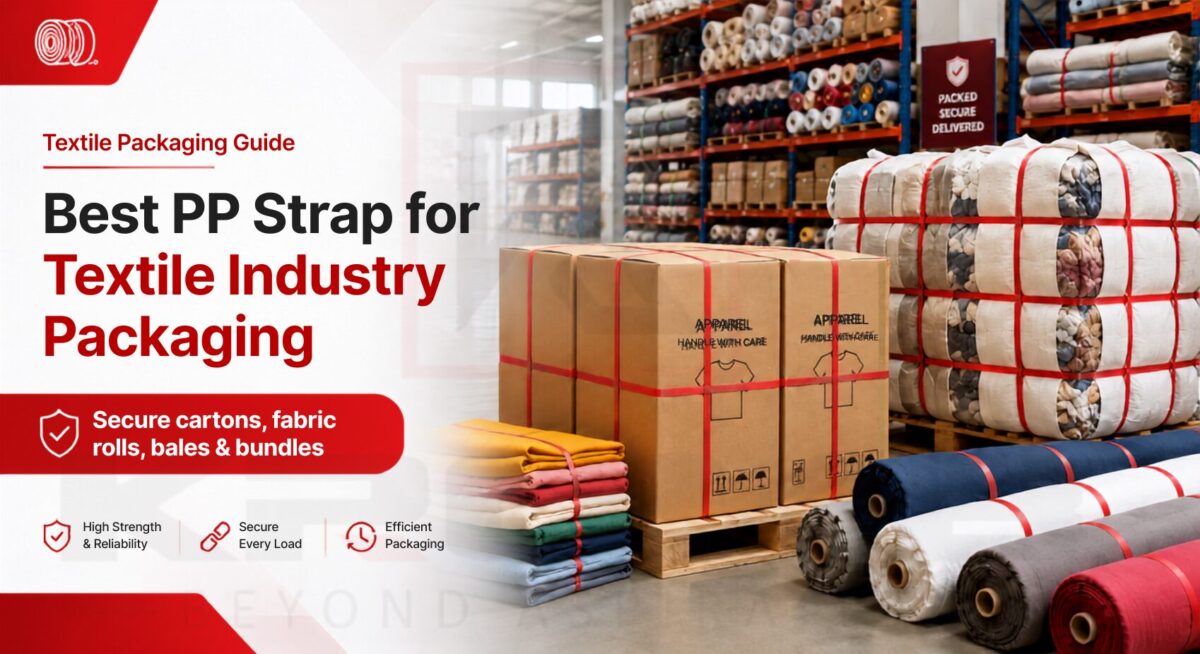
Best PP Strap for Textile Industry Packaging

Best PP Strap for Textile Industry Packaging | Kromb

Best PP Strap for Textile Industry Packaging

In the textile industry, packaging is not only about tying a bundle. It is about keeping fabric rolls, cartons, bales and finished garments secure during storage, handling and transportation. Choosing the best PP strap for textile industry packaging helps improve load stability, reduce packaging damage and control overall packing cost.

Why PP Strap is Important for Textile Packaging

Textile products often move through multiple stages before reaching the customer. Fabric rolls, yarn cartons, garment boxes, textile bales and export bundles may be handled by workers, forklifts, transport vehicles and warehouse teams. During this process, the packaging strap must hold the load firmly without damaging the product.

PP Strap, also known as polypropylene strap, is one of the most practical solutions for textile packaging because it is lightweight, flexible, cost-effective and compatible with manual, semi-automatic and automatic strapping machines.

For textile manufacturers, exporters, wholesalers and packaging units, a good quality PP strap can make daily packing faster, cleaner and more reliable.

What Makes a PP Strap Best for Textile Industry?

The best PP strap for textile packaging should offer the right balance of strength, flexibility, elongation and machine performance. It should be strong enough to hold textile bundles, but flexible enough to avoid cutting into cartons, fabric bales or soft packaging surfaces.

Selection PointWhy It Matters in Textile PackagingRecommended Choice
WidthWider straps provide better load holding for bigger cartons and bales.Choose based on carton size, bale weight and machine compatibility.
ThicknessThickness affects strap strength, stiffness and durability.Use medium thickness for regular cartons and higher thickness for heavy textile bales.
Tensile StrengthHigh tensile strength helps prevent strap breakage during handling and transport.Select strength according to package weight and transit conditions.
FlexibilityFlexible straps are easier to handle and safer for fabric and carton surfaces.Use smooth and flexible PP strap for textile bundles and garment cartons.
Machine GradeMachine-compatible strap improves packing speed and reduces downtime.Use machine-grade PP strap for semi-automatic and automatic strapping machines.

Common Uses of PP Strap in the Textile Industry

PP strap is widely used across different textile packaging operations because it is suitable for light to medium loads and high-volume packing lines. It works well for both domestic dispatch and export-oriented packaging when the right strap specification is selected.

Textile Products Packed with PP Strap

  • Fabric rolls and fabric bundles
  • Garment cartons and apparel boxes
  • Yarn cartons and thread packaging
  • Textile bales and soft bundles
  • Home textile and furnishing products
  • Export cartons for textile goods

Packaging Benefits for Textile Units

  • Fast and simple bundle securing
  • Reduced carton opening during transport
  • Better stacking and warehouse handling
  • Lower packaging cost for regular dispatch
  • Clean and professional packing appearance
  • Compatibility with strapping machines

Recommended PP Strap Width and Thickness for Textile Packaging

The right width and thickness depend on the weight of the package, type of textile product, number of straps used and transportation method. A small garment carton may need a different PP strap than a heavy textile bale or large fabric roll bundle.

Textile Packaging TypePackaging RequirementPP Strap Suggestion
Garment CartonsLight to medium load, clean carton packingFlexible PP strap with smooth machine performance
Fabric Roll BundlesStable bundling without product damageMedium-width PP strap with good elongation
Textile BalesHigher holding force and secure compressionThicker PP strap with higher tensile strength
Yarn and Thread CartonsCarton safety and easy handlingMachine-grade PP strap for fast repetitive packing
Export Textile PackagingLong-distance movement and better load securityQuality PP strap selected as per package weight and route
Helpful Tip: Before selecting a PP strap, check package weight, carton quality, edge sharpness, storage time and machine type. You can also read our guide on PP Strap Buying Guide: Width, Thickness and Tensile Strength Explained for more detailed selection guidance.

Benefits of Using PP Strap for Textile Packaging

Textile businesses usually need packaging materials that are affordable, easy to use and suitable for daily high-volume operations. PP strap meets these needs very well, especially for carton packaging, soft bundle packaging and light-to-medium load securing.

  • Lightweight and easy for workers to handle
  • Cost-effective for regular textile packaging
  • Good flexibility for cartons, bales and fabric bundles
  • Available in different widths, thicknesses and colours
  • Suitable for manual, semi-automatic and automatic strapping machines
  • Helps improve the appearance and safety of packed goods

When used with the right strapping machine, PP strap can help textile units increase packing speed and maintain consistent strap tension across multiple packages.

Cost Considerations for Textile Industry PP Strap

The best PP strap is not always the cheapest strap. A low-quality strap may break, jam in the machine or provide weak holding power. This can lead to repacking, product damage and extra labour cost. Textile packaging teams should compare the complete value, not only the roll price.

For textile packaging, choose a PP strap that offers consistent quality, proper tensile strength and smooth machine running. A reliable strap can reduce packing issues and improve overall dispatch efficiency.
Cost FactorImpact on Textile Packaging
Meter per RollHigher usable length can reduce roll changes and improve productivity.
Breakage RateLow-quality strap can increase waste, labour time and repacking cost.
Machine CompatibilitySmooth running strap reduces machine downtime and packing delays.
Load SafetyProper strength helps reduce carton opening and bundle loosening.
Packaging AppearanceConsistent strap quality gives packed textile goods a cleaner professional look.

How to Choose the Best PP Strap for Your Textile Business

Every textile packaging line has different requirements. A garment exporter, yarn manufacturer, fabric processing unit and wholesale textile supplier may all need different PP strap specifications. The right selection depends on load size, packing speed, storage conditions and transport distance.

Choose a PP Strap Based on:

  • Weight of the carton, roll, bale or bundle
  • Required strap tension and load holding strength
  • Manual, semi-automatic or automatic packing process
  • Domestic dispatch or export transportation
  • Carton quality, bundle surface and handling conditions
  • Daily packaging volume and required packing speed

Avoid These Common Mistakes:

  • Choosing only by lowest price without checking quality
  • Using low tensile strap for heavy textile bales
  • Selecting a strap that does not run smoothly in the machine
  • Ignoring width and thickness requirements
  • Using the same strap specification for all packaging types

Final Verdict: Which PP Strap is Best for Textile Industry?

The best PP strap for textile industry packaging is the one that matches your product weight, carton size, machine type and transport requirement. For regular garment cartons and textile boxes, a flexible and machine-grade PP strap is usually ideal. For textile bales and heavier bundles, a thicker PP strap with higher tensile strength is a better choice.

If your business handles daily textile dispatch, investing in good quality PP strap can help reduce packaging problems, improve load safety and keep total packing cost under control.

FAQs on PP Strap for Textile Industry Packaging

1. Is PP strap suitable for textile packaging?

Yes, PP strap is widely used for textile packaging because it is lightweight, flexible, cost-effective and suitable for cartons, fabric bundles, garment boxes and textile bales.

2. Which PP strap is best for garment cartons?

For garment cartons, a flexible and machine-compatible PP strap is usually the best choice. The exact width and thickness should be selected according to carton size and weight.

3. Can PP strap be used for textile bales?

Yes, PP strap can be used for textile bales when the correct thickness and tensile strength are selected. Heavier bales require stronger PP strap specifications.

4. Is PP strap better than tape for textile cartons?

PP strap provides stronger external holding support than normal packaging tape, especially for heavy cartons or bundles. Many textile businesses use both tape and PP strap for better packing security.

5. Can PP strap run in automatic strapping machines?

Yes, machine-grade PP strap can be used in semi-automatic and automatic strapping machines. It is important to choose the correct width, thickness and roll quality for smooth machine operation.

Need the Right PP Strap for Textile Packaging?

Kromb helps textile manufacturers, exporters and packaging teams select the right PP strap for cartons, bales, bundles and machine-based packaging lines. Choose the right strap to improve product safety, packing speed and cost efficiency.

Contact Kromb Today
Categories
Blog

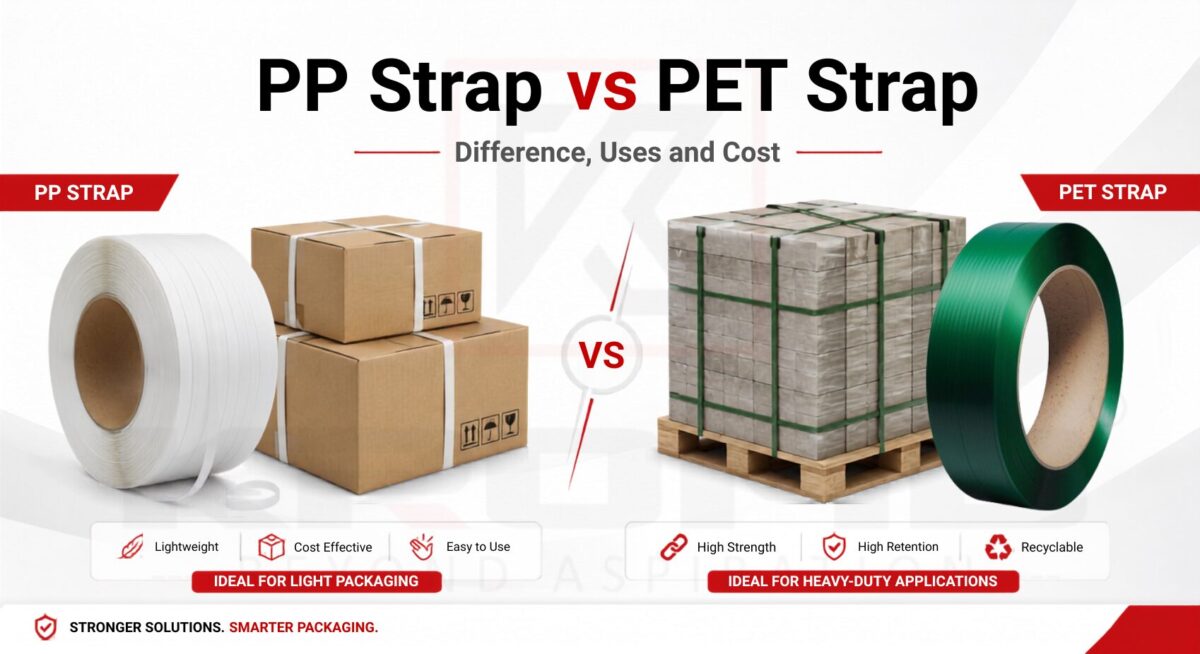
PP Strap vs PET Strap: Difference, Uses and Cost

PP Strap vs PET Strap: Difference, Uses and Cost | Kromb

PP Strap vs PET Strap: Difference, Uses and Cost

Choosing the right strapping material is very important for improving product safety, maintaining load stability and controlling total packaging cost. In this guide, we compare PP Strap vs PET Strap clearly so you can select the best option for cartons, pallets or heavy-duty packaging.

Quick Overview: What is PP Strap and PET Strap?

PP Strap, or Polypropylene Strap, is a lightweight and economical plastic strapping material. It is commonly used for carton packing, box bundling, paper bundles, textile packing, food packaging and light-to-medium load applications.

PET Strap, or Polyester Strap, is stronger, more rigid and suitable for heavy-duty packaging. PET strap is commonly used for bricks, tiles, metal, wood, heavy pallets, export packaging and high-tension applications.

In simple terms, if you need economical carton packaging, PP strap is a practical choice. If the load is heavy and high strength is required, PET strap can be the better option.

PP Strap vs PET Strap: Main Difference

Both straps are plastic-based packaging straps, but their material behavior, tensile strength, elongation, recovery and price are different. The table below gives a quick comparison:

PointPP StrapPET Strap
Full FormPolypropylene StrapPolyester Strap
StrengthSuitable for light to medium loadsSuitable for medium to heavy loads
FlexibilityMore flexible and easy to handleComparatively stiff and strong
ElongationHigher elongation; absorbs light shockControlled elongation; offers better load stability
CostUsually more economicalUsually higher cost, but stronger performance
Common UseCartons, boxes, bundles, FMCG, textile, paperPallets, bricks, tiles, metals, timber, export loads
Machine CompatibilityManual, semi-automatic and automatic machinesManual, pneumatic and heavy-duty strapping tools

Uses of PP Strap and PET Strap

PP Strap Uses

  • Corrugated box packing
  • Carton sealing and bundling
  • Textile bale packaging
  • Newspaper and paper bundle packing
  • FMCG and retail packaging
  • Light pallet stabilization

PET Strap Uses

  • Heavy pallet packaging
  • Tiles and ceramic packaging
  • Brick and block bundling
  • Metal sheet and pipe strapping
  • Timber and plywood packaging
  • Export and transport packaging

If your packaging requirement is carton-based, PP strap combined with a strapping machine can deliver fast and cost-effective output. For heavy loads, PET strap provides strong grip and better load retention.

PP Strap vs PET Strap Cost Comparison

Cost is not decided only by the price per kg or per roll. Total packaging cost should also include strap width, thickness, tensile strength, meters per roll, wastage, machine compatibility and the risk of transit damage.

For light and regular carton packaging, PP strap is usually more budget-friendly. For heavy loads, the higher price of PET strap can be justified through damage reduction and better load safety.
Cost FactorPP StrapPET Strap
Initial PriceLowerHigher
Best for Budget PackingYesOnly when strength is required
Damage ControlGood for light loadsBetter for heavy and rigid loads
Value for MoneyHigh in carton packagingHigh in heavy-duty packaging

Which Strap Should You Choose?

To choose the correct strap, it is important to check product weight, box size, transport distance, storage conditions and handling method. Choosing the wrong strap can make packaging loose, increase product damage risk or create extra cost.

Choose PP Strap if:

  • You are packing cartons, boxes or light bundles.
  • You need a low-cost and fast packaging solution.
  • You use a semi-automatic or automatic strapping machine.
  • The load is not heavy and does not have sharp edges.

Choose PET Strap if:

  • Your load is heavy, rigid or palletized.
  • The shipment involves long-distance transport or export packaging.
  • High tensile strength and better retention are required.
  • The material includes bricks, tiles, metal, wood or heavy industrial goods.
Pro Tip: If you are selecting PP strap, choose the right combination of width, thickness and tensile strength. For detailed guidance, you can also read our guide: PP Strap Buying Guide: Width, Thickness and Tensile Strength Explained.

PP Strap Benefits for Regular Packaging

The biggest advantages of PP strap are its economical nature, flexibility and easy machine compatibility. It is ideal for businesses where cartons or medium-size packages are strapped in high quantity every day.

  • Lightweight and easy to handle
  • Good for high-volume carton packing
  • Available in different colours, widths and thicknesses
  • Manual and machine-grade options available
  • Cost-effective for regular industrial packaging

At Kromb, you can explore suitable PP strap rolls, packaging tape and other packaging materials according to your packaging requirement.

Final Verdict: PP Strap or PET Strap?

The decision between PP Strap vs PET Strap mainly depends on the load type. PP strap is economical, flexible and best for carton packaging. PET strap is stronger, more stable and better for heavy-duty packaging.

If your main goal is regular box packing, bundle packing or cost-saving packaging, PP strap is a smart choice. If you need high tension, heavy pallet safety and long-distance load stability, consider PET strap.

FAQs on PP Strap vs PET Strap

1. What is the biggest difference between PP strap and PET strap?

PP strap is lightweight and economical, while PET strap is stronger and suitable for heavy-duty loads.

2. Is PP strap or PET strap better for carton packing?

For regular carton packing, PP strap is a better and more cost-effective choice, especially when the load is light or medium.

3. Which strap should be used for heavy pallet packaging?

For heavy pallet packaging, tiles, bricks, metals and timber, PET strap is generally better because it offers higher tensile strength and better load retention.

4. Is PP strap cheaper than PET strap?

Usually, the initial cost of PP strap is lower than PET strap. However, the final cost depends on the application, strap size, quality and packaging damage risk.

5. Can PP strap be used in an automatic strapping machine?

Yes, PP strap is commonly used in manual, semi-automatic and automatic strapping machines. Strap width and thickness should be selected according to the machine.

Need the Right Packaging Strap for Your Business?

Kromb helps you select PP strap, packaging materials and machine-compatible solutions according to your packaging requirement. By choosing the right strap, you can improve product safety and control packaging cost.

Contact Kromb Today
Categories
Blog

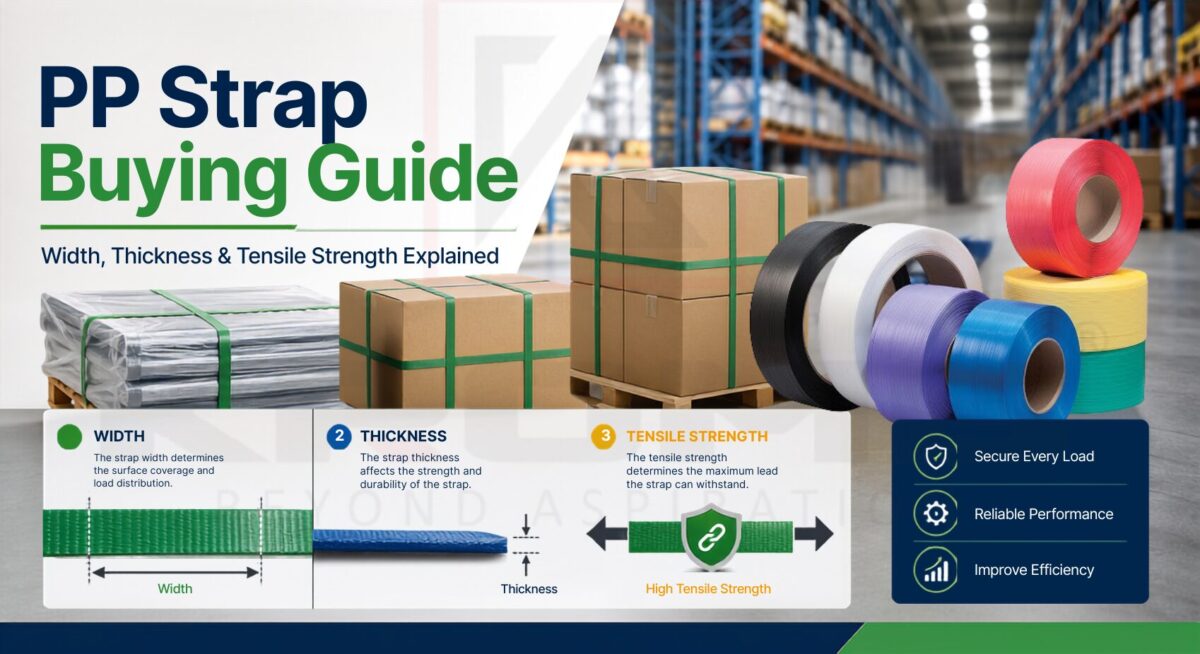
PP Strap Buying Guide: Width, Thickness and Tensile Strength Explained

PP Strap Buying Guide: Width, Thickness and Tensile Strength Explained

Choosing the right PP strap is important for secure packaging, smooth machine performance and lower packing cost. In this guide, we explain PP strap width, thickness and tensile strength so you can select the best strap for your packaging requirement.

What is PP Strap?

PP strap, also known as polypropylene strap, is a lightweight and economical packaging strap used for carton sealing, box bundling, pallet packing and industrial packaging. It is commonly used with manual tools, semi-automatic machines and fully automatic strapping machines.

A good quality PP strap helps keep products secure during handling, storage and transportation. But to get the best performance, buyers should understand three important factors: strap width, strap thickness and tensile strength.

Quick Insight: The right PP strap is not always the thickest strap. The best strap is the one that matches your box weight, machine type, sealing method and packaging application.

Why Width, Thickness and Tensile Strength Matter

Many buyers choose PP strap only by looking at price, but the wrong strap size can cause breakage, loose packing, machine jamming and product damage. Strap width, thickness and tensile strength directly affect how strongly your package stays secured.

Width

Strap width decides the surface coverage and load distribution on the box or bundle.

Thickness

Strap thickness affects stiffness, holding power and suitability for light or heavy packaging.

Tensile Strength

Tensile strength shows how much pulling force the strap can handle before breaking.

PP Strap Width Explained

PP strap width means the measurement of the strap from one edge to the other. It is usually measured in millimeters. Common PP strap widths include 5 mm, 6 mm, 9 mm, 12 mm, 15 mm and 19 mm, depending on the application and machine compatibility.

  • Narrow PP Strap: Suitable for light cartons, small boxes and automatic machine packing.
  • Medium Width PP Strap: Ideal for general packaging, corrugated boxes, textile bundles and warehouse use.
  • Wide PP Strap: Better for heavier cartons, ceramic boxes, industrial goods and strong bundling applications.
Buyer Tip: Wider strap gives better surface contact, but it should match your strapping machine guide, sealing system and box size.

PP Strap Thickness Explained

PP strap thickness is the measurement of how thick the strap is. It is generally measured in millimeters or microns. A thicker strap usually provides better stiffness and holding strength, but it may not be suitable for every machine.

For machine packaging, consistency in thickness is very important. If the strap thickness is uneven, it can create feeding issues, poor sealing and machine stoppage. This is why machine-grade fully automatic PP strap and semi automatic PP strap should be selected carefully.

  • Light Thickness: Best for lightweight cartons and high-speed machine operations.
  • Medium Thickness: Suitable for regular industrial packaging and box strapping.
  • Heavy Thickness: Recommended for stronger holding strength and heavier packaging applications.

What is Tensile Strength in PP Strap?

Tensile strength is the maximum force a PP strap can handle before it breaks. It is one of the most important factors when buying packaging strap. Higher tensile strength means the strap can hold heavier loads and resist pulling pressure during transport.

However, tensile strength should be selected according to actual packaging needs. Using a very high strength strap for a very light carton may increase cost unnecessarily. On the other hand, using a weak strap for heavy boxes can lead to strap breakage and unsafe packing.

Simple Meaning: Tensile strength tells you how strong the PP strap is when pulled. For heavy products, choose higher tensile strength. For light cartons, choose a balanced and cost-effective strap.

Recommended PP Strap Selection Guide

Packaging ApplicationSuggested Strap TypeImportant Factor
Light carton packingNarrow PP StrapCost-effective and easy machine feeding
Regular box strappingMedium width PP StrapBalanced width, thickness and strength
Automatic machine packingFully Automatic PP StrapSmooth feeding and consistent thickness
Semi-automatic machine packingSemi Automatic PP StrapGood sealing and reliable machine performance
Textile bundle packingHigh tensile PP StrapStrong grip and better holding power
Ceramic and fragile box packingStrong machine-grade PP StrapSecure packing with reduced risk of loosening

How to Choose the Right PP Strap Before Buying

Before placing an order, you should check your product weight, carton size, machine type and required packing strength. This helps you avoid over-spending on unnecessary thickness or buying a weak strap that may fail during handling.

  • Check Product Weight: Heavy products need better tensile strength and holding power.
  • Check Box Size: Larger boxes may need wider strap for better load distribution.
  • Check Machine Type: Automatic and semi-automatic machines require compatible strap size and quality.
  • Check Sealing Quality: Strap should seal properly without slipping or breaking.
  • Check Application: Textile, ceramic, logistics and corrugated packaging may need different PP strap specifications.

Common Mistakes Buyers Should Avoid

Selecting PP strap only by price can increase packaging problems in the long run. A low-quality strap may look economical, but it can cause higher wastage, rework and product damage.

  • Choosing strap without checking machine compatibility.
  • Using low tensile strength strap for heavy boxes.
  • Selecting too much thickness for lightweight packaging.
  • Ignoring width consistency in automatic machine applications.
  • Buying PP strap without testing sealing and feeding performance.

Why Choose Kromb India for PP Strap?

Kromb India offers reliable PP strap solutions for different industrial packaging needs. Whether you need strap for carton packing, textile bundles, ceramic boxes, logistics use or machine packaging, Kromb India can help you choose the right specification.

Our PP straps are available in different widths, thicknesses, colors and machine-grade options to suit various packaging applications. You can explore our PP Strap range or contact our team for the right product recommendation.

Frequently Asked Questions

What is the best width for PP strap?

The best width depends on your box size, load weight and machine type. Light cartons can use narrow straps, while heavier boxes usually need wider straps for better holding.

Does thicker PP strap mean stronger PP strap?

Thicker PP strap can provide better stiffness and holding power, but strength also depends on material quality, tensile strength and manufacturing consistency.

What is tensile strength in PP strap?

Tensile strength is the maximum pulling force a PP strap can handle before breaking. It helps buyers select the right strap for light, medium or heavy packaging.

Which PP strap is best for automatic machines?

Fully automatic machine-grade PP strap is best for automatic strapping machines because it offers consistent width, thickness and smooth feeding performance.

How do I select PP strap for heavy boxes?

For heavy boxes, choose a PP strap with suitable width, higher tensile strength and proper thickness. It is also important to check machine compatibility before buying.

Need Help Choosing the Right PP Strap?

Contact Kromb India for expert guidance, PP strap recommendation and a quick quote based on your packaging requirement.

Request a Quote
Categories
Blog News

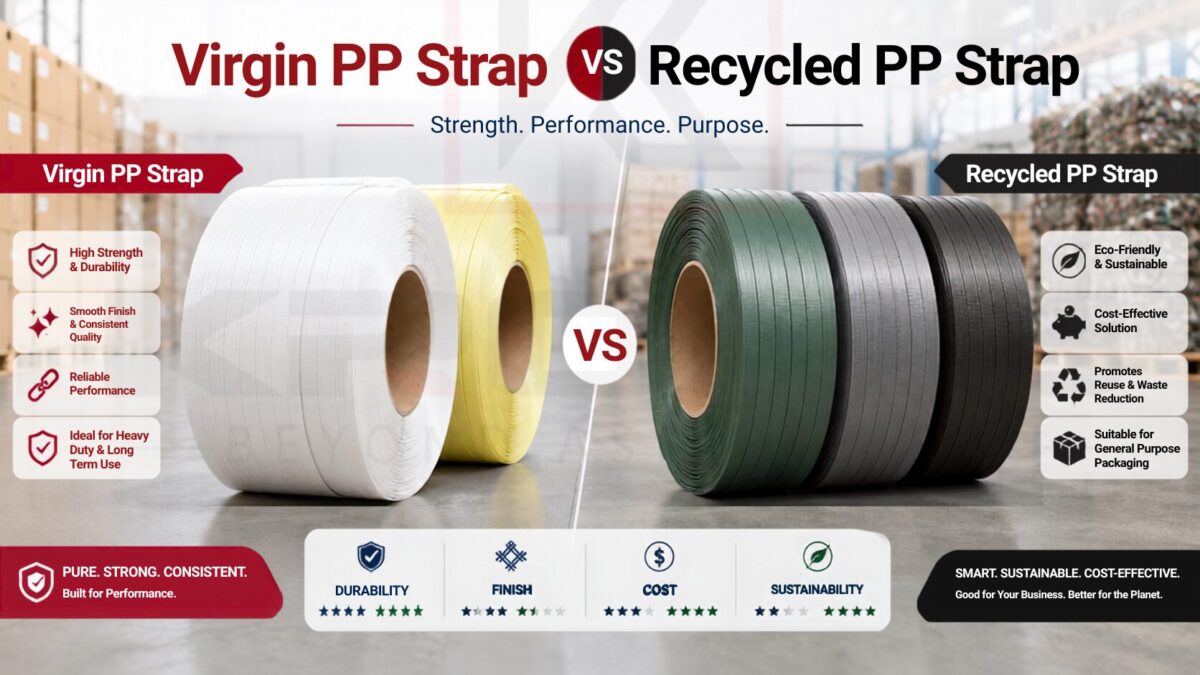
Virgin PP Strap vs. Recycled PP Strap: Which One is Right for Your Packaging?

Effective packaging keeps your goods safe during transit. Many customers at Kromb India often ask, “What is the real difference between Virgin PP straps and Recycled PP straps, and which one should I choose?” Although both look similar, they serve different purposes. This guide helps you make an informed decision for your business needs.

What is Virgin PP Strap?

Manufacturers produce Virgin PP (Polypropylene) straps using 100% pure, raw plastic granules. Because it contains no fillers, it stands out as the premium choice for heavy-duty applications.

Key Benefits:

  • Superior Tensile Strength: It securely holds heavy loads without snapping.
  • Consistent Quality: Uniform thickness ensures smooth performance in automatic strapping machines.
  • High Durability: It performs exceptionally well in harsh weather conditions.
  • Better Aesthetics: A bright, professional finish enhances your product packaging.

Best for: Export packaging, heavy industrial goods, and fully automatic strapping machines.

What is Recycled PP Strap?

Recycled PP straps are created by re-processing plastic waste. While this option is more affordable, it works perfectly for specific logistics requirements.

Key Benefits:

  • Cost-Effective: This strap is significantly cheaper, allowing you to reduce your overall packaging costs.
  • Eco-Friendly: Choosing recycled products supports a circular economy and reduces waste.

Best for: Lightweight packaging, internal transfers, and secondary packaging tasks where maximum strength is not required.

Quick Comparison Table

FeatureVirgin PP StrapRecycled PP Strap
StrengthVery HighModerate
PricePremiumBudget-friendly
Machine CompatibilityExcellentGood (Manual/Semi-auto)

How to Choose the Right Strap?

Before you buy, consider these three questions to find the perfect fit:

  1. What is the weight of your product? Choose Virgin for heavy items; otherwise, use Recycled for lighter loads.
  2. What type of machine do you operate? Automatic machines work best with Virgin straps, while manual users can easily use Recycled ones.
  3. What is your budget? If you need maximum protection, invest in Virgin. For simple cost-saving, choose Recycled.

Frequently Asked Questions (FAQ)

1. Can I use recycled PP strap for heavy-duty shipping?
Generally, no. Recycled straps possess lower tensile strength than virgin straps. Therefore, we recommend using Virgin PP straps for export-quality shipping to ensure safety.

2. Why does Virgin PP strap cost more than the recycled alternative?
Virgin PP straps use 100% pure raw material. This production method provides superior strength and a premium finish, which justifies the higher price point.

3. Will recycled strap jam my automatic strapping machine?
Yes, it might. Because recycled straps sometimes have variations in thickness, they can cause feeding issues. Consequently, we advise using Virgin straps for high-speed automatic machines.

4. Is there an eco-friendly option for high-strength needs?
If you require high strength while remaining eco-friendly, you should look for specifically reinforced recycled straps or consider PET (Polyester) strapping, which is both durable and recyclable.

At Kromb India, we provide high-quality packaging solutions tailored to your needs. Whether you require the strength of Virgin PP or the efficiency of Recycled PP, we have the right product for your warehouse.

Categories
Blog News

How to Select the Right PP Strap for High-Speed Automatic Machines: A Buyer’s Guide

Selecting the right strapping material is crucial for maintaining high-speed production. If you choose the wrong PP strap, you invite frequent jams, heater blade damage, and costly production downtime.

What to Look for in a High-Speed PP Strap

Before purchasing, keep these four technical factors in mind to ensure compatibility with your fully automatic machine:

  • Dimensional Accuracy: Even a 0.5mm deviation in width can cause the strap to jam in the arch.
  • Surface Texture: Embossed straps provide better friction for tensioning but must be uniform to prevent “shaving” inside the machine.
  • Tensile Strength: Ensure the break strength matches your load requirements to prevent mid-cycle snapping.
  • Core Diameter: Always check if your machine requires a 200mm or 400mm core diameter.

The Kromb India Quality Promise

At Kromb India, we manufacture straps specifically engineered for the high tolerances of automatic packaging lines. Our virgin-grade PP straps are tested for consistency, reducing machine jams by up to 90%.

Quick Buyer’s Checklist

FeatureWhat to Choose
Material100% Virgin PP
Width Tolerance+/- 0.5mm

Frequently Asked Questions (FAQs)

Q: Does strap color affect performance?
A: Generally, no. However, ensure the ink used for branding does not flake off, as it can clog your machine’s sensors.

Q: Why is “Virgin” material recommended?
A: Virgin PP has better molecular alignment, making it flexible enough for the machine’s bending path but strong enough to hold tension.

Categories
Blog News

The Hidden Cost of Poor Packaging

In the competitive world of e-commerce, every shipment is a promise. But what happens when that promise arrives damaged? Poor packaging is more than just a minor inconvenience; it is a hidden cost that drains your profits and destroys customer trust.

The Financial Impact of Bad Strapping

When a strap breaks during transit, your box arrives at the customer’s door in poor condition. This leads to several hidden business losses:

  • High Return Costs: Dealing with reverse logistics costs significantly more than standard shipping.
  • Replacement Expenses: Reshipping damaged goods eats directly into your profit margins.
  • Customer Churn: A customer who receives a damaged box is much less likely to buy from your brand again.

Why Quality Strapping Matters

Many businesses try to cut costs by using cheap, recycled strapping material. This is a false economy. High-speed automated lines require consistent tension and high durability—something that only high-quality virgin-grade PP straps can provide.

The Kromb India Solution

At Kromb India, we understand that secure packaging is the silent guardian of your brand reputation. Our precision-engineered straps ensure that your products remain secure from your warehouse to your customer’s doorstep.

Protect your brand—upgrade to our premium strapping solutions today.

Conclusion

Don’t let poor packaging be the reason you lose customers. Investing in reliable materials is an investment in your company’s growth.


Frequently Asked Questions (FAQs)

Q: How can I reduce shipping damages?
A: Using premium, virgin-grade PP straps prevents strap breakage during transit, ensuring your goods arrive safely.

Q: Is recycled strap safe for heavy packaging?
A: Recycled straps are often brittle and prone to snapping. For heavy or high-value items, always use virgin-grade material from Kromb India.

Q: Does packaging quality affect brand trust?
A: Yes, receiving a damaged package creates a negative first impression, often leading to customer churn.

Categories
Blog News

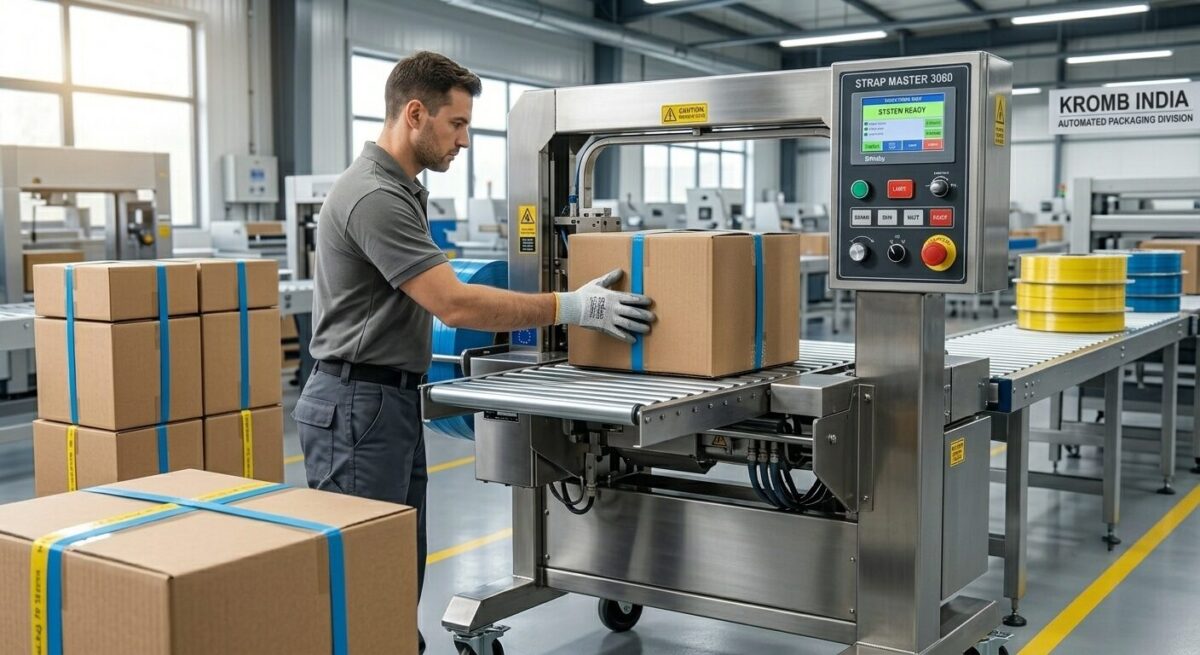
Top 5 Reasons Why Fully Automatic Strapping Machines Jam (And How to Fix It)

In high-speed industrial packaging, a fully automatic strapping machine is the backbone of efficiency. However, when a machine suddenly jams, the entire production line grinds to a costly halt.

If your online strapping line is facing frequent downtime, the issue might not be the machine itself—often, it’s the strapping material or minor maintenance oversights.

Here are the top 5 reasons why fully automatic strapping machines jam and practical solutions to fix them instantly.


1. Inconsistent Strap Thickness and Width

The Problem: High-speed automatic machines operate on precise mechanical tolerances. If you are using low-quality or locally sourced PP straps, minor variations in thickness or width can cause the strap to get stuck in the feeding guide or arch.

The Fix: Switch to precision-engineered, uniform strapping materials. Ensure your supplier guarantees strict dimensional tolerance control.

2. Excessive Strap Powder and Debris

The Problem: As PP straps pass through the tensioning rollers, low-grade straps tend to shave off, creating a fine plastic powder. Over time, this debris accumulates in the feed mechanism and welding head, causing misfeeds and jams.

The Fix: Implement a daily maintenance routine using compressed air to blow out dust from the strapping head. More importantly, use dust-free, virgin-quality PP straps that do not shred under high tension.

3. Using Brittle Recycled Material

The Problem: While recycled straps might seem cost-effective, they lack the tensile strength and flexibility required for high-speed automated lines. Brittle straps easily split, crack, or bend abnormally inside the machine arch, leading to instant jams.

The Fix: For fully automatic and online lines, always choose 100% virgin polypropylene (PP) straps. Virgin material offers superior stiffness for smooth feeding and high split resistance.

4. Improper Tension and Feed Roller Settings

The Problem: If the machine’s feed rollers are adjusted too tightly, they can deform the strap before it even enters the arch. Conversely, if they are too loose, the strap will slip, causing a feed timeout error.

The Fix: Calibrate your machine rollers according to the specific gauge of your strap (e.g., 9mm or 12mm). Check the user manual to match the mechanical tension with the strap’s technical specifications.

5. Accumulation of Carbon on the Heater Blade

The Problem: The sealing heater blade melts the strap to create a secure joint. If the blade accumulates burnt plastic residue (carbon), it won’t heat uniformly. This leads to incomplete seals, causing the strap to snap and snap-back into the machine cabinet, causing a jam.

The Fix: Clean the heater blade regularly with a wire brush or specialized blade cleaner while it is warm. If the blade is worn out, replace it immediately to ensure consistent thermal sealing.

Maximize Your Uptime with Kromb India

The easiest way to eliminate up to 80% of automatic strapping machine jams is by choosing the right consumable. At Kromb India, we manufacture premium-grade, fully customizable Virgin PP Straps engineered specifically for high-speed automated and online packaging lines.

Contact Kromb India Today for Custom Solutions →


Frequently Asked Questions (FAQs)

Q: How often should I clean the automatic strapping machine to prevent jams?

A: For high-speed online production lines, it is recommended to blow out plastic powder and debris with compressed air daily. Deep cleaning of the heater blade should be done weekly.

Q: Can I use recycled PP straps in online strapping machines?

A: It is not advisable. Recycled straps lack consistent dimensional tolerance and tensile strength, which are critical for high-speed fully automatic systems. Always use 100% virgin PP straps.

Q: What is the best strap size for high-speed cartoon box packaging?

A: Precision-engineered 9mm and 12mm virgin polypropylene (PP) straps are the industry standard for securing high-speed online automated packaging lines efficiently.

© Copyright 2026 | All Rights Reserved krombindia.com