Best PP Strap for Textile Industry Packaging
In the textile industry, packaging is not only about tying a bundle. It is about keeping fabric rolls, cartons, bales and finished garments secure during storage, handling and transportation. Choosing the best PP strap for textile industry packaging helps improve load stability, reduce packaging damage and control overall packing cost.
Why PP Strap is Important for Textile Packaging
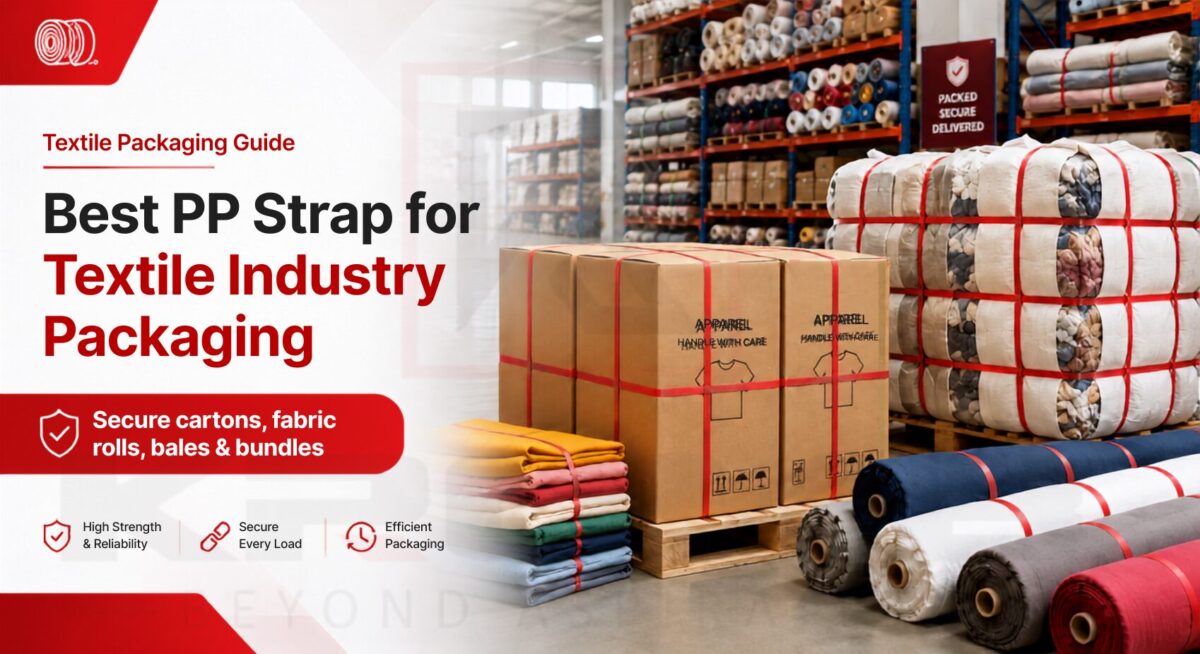
Textile products often move through multiple stages before reaching the customer. Fabric rolls, yarn cartons, garment boxes, textile bales and export bundles may be handled by workers, forklifts, transport vehicles and warehouse teams. During this process, the packaging strap must hold the load firmly without damaging the product.
PP Strap, also known as polypropylene strap, is one of the most practical solutions for textile packaging because it is lightweight, flexible, cost-effective and compatible with manual, semi-automatic and automatic strapping machines.
For textile manufacturers, exporters, wholesalers and packaging units, a good quality PP strap can make daily packing faster, cleaner and more reliable.
What Makes a PP Strap Best for Textile Industry?
The best PP strap for textile packaging should offer the right balance of strength, flexibility, elongation and machine performance. It should be strong enough to hold textile bundles, but flexible enough to avoid cutting into cartons, fabric bales or soft packaging surfaces.
| Selection Point | Why It Matters in Textile Packaging | Recommended Choice |
|---|---|---|
| Width | Wider straps provide better load holding for bigger cartons and bales. | Choose based on carton size, bale weight and machine compatibility. |
| Thickness | Thickness affects strap strength, stiffness and durability. | Use medium thickness for regular cartons and higher thickness for heavy textile bales. |
| Tensile Strength | High tensile strength helps prevent strap breakage during handling and transport. | Select strength according to package weight and transit conditions. |
| Flexibility | Flexible straps are easier to handle and safer for fabric and carton surfaces. | Use smooth and flexible PP strap for textile bundles and garment cartons. |
| Machine Grade | Machine-compatible strap improves packing speed and reduces downtime. | Use machine-grade PP strap for semi-automatic and automatic strapping machines. |
Common Uses of PP Strap in the Textile Industry
PP strap is widely used across different textile packaging operations because it is suitable for light to medium loads and high-volume packing lines. It works well for both domestic dispatch and export-oriented packaging when the right strap specification is selected.
Textile Products Packed with PP Strap
- Fabric rolls and fabric bundles
- Garment cartons and apparel boxes
- Yarn cartons and thread packaging
- Textile bales and soft bundles
- Home textile and furnishing products
- Export cartons for textile goods
Packaging Benefits for Textile Units
- Fast and simple bundle securing
- Reduced carton opening during transport
- Better stacking and warehouse handling
- Lower packaging cost for regular dispatch
- Clean and professional packing appearance
- Compatibility with strapping machines
Recommended PP Strap Width and Thickness for Textile Packaging
The right width and thickness depend on the weight of the package, type of textile product, number of straps used and transportation method. A small garment carton may need a different PP strap than a heavy textile bale or large fabric roll bundle.
| Textile Packaging Type | Packaging Requirement | PP Strap Suggestion |
|---|---|---|
| Garment Cartons | Light to medium load, clean carton packing | Flexible PP strap with smooth machine performance |
| Fabric Roll Bundles | Stable bundling without product damage | Medium-width PP strap with good elongation |
| Textile Bales | Higher holding force and secure compression | Thicker PP strap with higher tensile strength |
| Yarn and Thread Cartons | Carton safety and easy handling | Machine-grade PP strap for fast repetitive packing |
| Export Textile Packaging | Long-distance movement and better load security | Quality PP strap selected as per package weight and route |
Benefits of Using PP Strap for Textile Packaging
Textile businesses usually need packaging materials that are affordable, easy to use and suitable for daily high-volume operations. PP strap meets these needs very well, especially for carton packaging, soft bundle packaging and light-to-medium load securing.
- Lightweight and easy for workers to handle
- Cost-effective for regular textile packaging
- Good flexibility for cartons, bales and fabric bundles
- Available in different widths, thicknesses and colours
- Suitable for manual, semi-automatic and automatic strapping machines
- Helps improve the appearance and safety of packed goods
When used with the right strapping machine, PP strap can help textile units increase packing speed and maintain consistent strap tension across multiple packages.
Cost Considerations for Textile Industry PP Strap
The best PP strap is not always the cheapest strap. A low-quality strap may break, jam in the machine or provide weak holding power. This can lead to repacking, product damage and extra labour cost. Textile packaging teams should compare the complete value, not only the roll price.
| Cost Factor | Impact on Textile Packaging |
|---|---|
| Meter per Roll | Higher usable length can reduce roll changes and improve productivity. |
| Breakage Rate | Low-quality strap can increase waste, labour time and repacking cost. |
| Machine Compatibility | Smooth running strap reduces machine downtime and packing delays. |
| Load Safety | Proper strength helps reduce carton opening and bundle loosening. |
| Packaging Appearance | Consistent strap quality gives packed textile goods a cleaner professional look. |
How to Choose the Best PP Strap for Your Textile Business
Every textile packaging line has different requirements. A garment exporter, yarn manufacturer, fabric processing unit and wholesale textile supplier may all need different PP strap specifications. The right selection depends on load size, packing speed, storage conditions and transport distance.
Choose a PP Strap Based on:
- Weight of the carton, roll, bale or bundle
- Required strap tension and load holding strength
- Manual, semi-automatic or automatic packing process
- Domestic dispatch or export transportation
- Carton quality, bundle surface and handling conditions
- Daily packaging volume and required packing speed
Avoid These Common Mistakes:
- Choosing only by lowest price without checking quality
- Using low tensile strap for heavy textile bales
- Selecting a strap that does not run smoothly in the machine
- Ignoring width and thickness requirements
- Using the same strap specification for all packaging types
Final Verdict: Which PP Strap is Best for Textile Industry?
The best PP strap for textile industry packaging is the one that matches your product weight, carton size, machine type and transport requirement. For regular garment cartons and textile boxes, a flexible and machine-grade PP strap is usually ideal. For textile bales and heavier bundles, a thicker PP strap with higher tensile strength is a better choice.
If your business handles daily textile dispatch, investing in good quality PP strap can help reduce packaging problems, improve load safety and keep total packing cost under control.
FAQs on PP Strap for Textile Industry Packaging
1. Is PP strap suitable for textile packaging?
Yes, PP strap is widely used for textile packaging because it is lightweight, flexible, cost-effective and suitable for cartons, fabric bundles, garment boxes and textile bales.
2. Which PP strap is best for garment cartons?
For garment cartons, a flexible and machine-compatible PP strap is usually the best choice. The exact width and thickness should be selected according to carton size and weight.
3. Can PP strap be used for textile bales?
Yes, PP strap can be used for textile bales when the correct thickness and tensile strength are selected. Heavier bales require stronger PP strap specifications.
4. Is PP strap better than tape for textile cartons?
PP strap provides stronger external holding support than normal packaging tape, especially for heavy cartons or bundles. Many textile businesses use both tape and PP strap for better packing security.
5. Can PP strap run in automatic strapping machines?
Yes, machine-grade PP strap can be used in semi-automatic and automatic strapping machines. It is important to choose the correct width, thickness and roll quality for smooth machine operation.
Need the Right PP Strap for Textile Packaging?
Kromb helps textile manufacturers, exporters and packaging teams select the right PP strap for cartons, bales, bundles and machine-based packaging lines. Choose the right strap to improve product safety, packing speed and cost efficiency.
Contact Kromb Today